As the nation targets a 50% renewable energy share in the national power mix by 2030, electric utilities and power distribution cooperatives face an unprecedented operational shift. Distributed Energy Resources (DERs), including rooftop solar PV, Battery Energy Storage Systems (BESS), microgrids, and Electric Vehicle (EV) chargers, are transforming traditional one-way power transmission into dynamic, bidirectional networks at the grid edge.
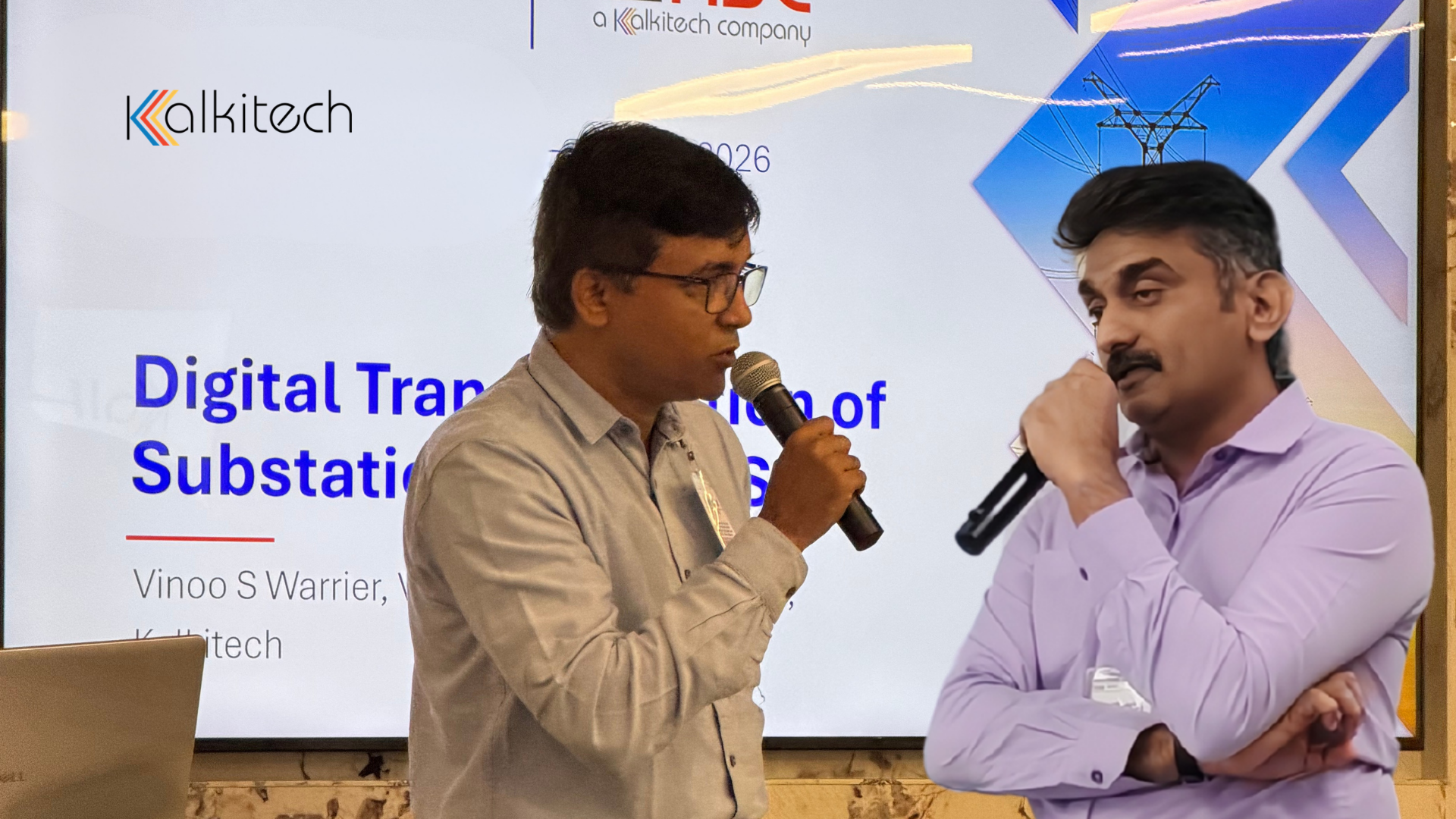
To address these evolving challenges, energy technology leaders recently presented a series of technical workshops on Substation Automation Systems (SAS) and Grid-Edge Control Architecture. Led by industry experts Vinoo S. Warrier, Vice President and Principal Consultant at Kalkitech, and Nirmal Thaliyil, Director of Business Development at ASE/Kalkitech, the sessions explored how vendor-neutral software middleware, protocol normalization, and virtualized protection can future-proof power infrastructure and strengthen grid resilience.
1. Digital Transformation of Substations & Automation Systems (SAS)
Modernizing physical substation infrastructure is essential for maintaining power quality, reducing system losses, and ensuring resilience during extreme weather events and periods of peak demand.
- IEC 61850 Process Bus and Sampled Measured Values (SMV)
Replaces kilometers of traditional copper control wiring with high-speed fiber-optic Local Area Networks (LANs). This approach can reduce copper wiring requirements by up to 80% while eliminating secondary Current Transformer (CT) open-circuit hazards during maintenance activities. - Virtual Protection and Control (vPAC) & Centralized Protection (VPR)
Containerized software applications hosted on centralized edge servers replace single-purpose hardware protection relays, simplifying maintenance, reducing equipment footprints, and lowering long-term capital expenditures. - Automated System Configuration Language (SCL) Frameworks
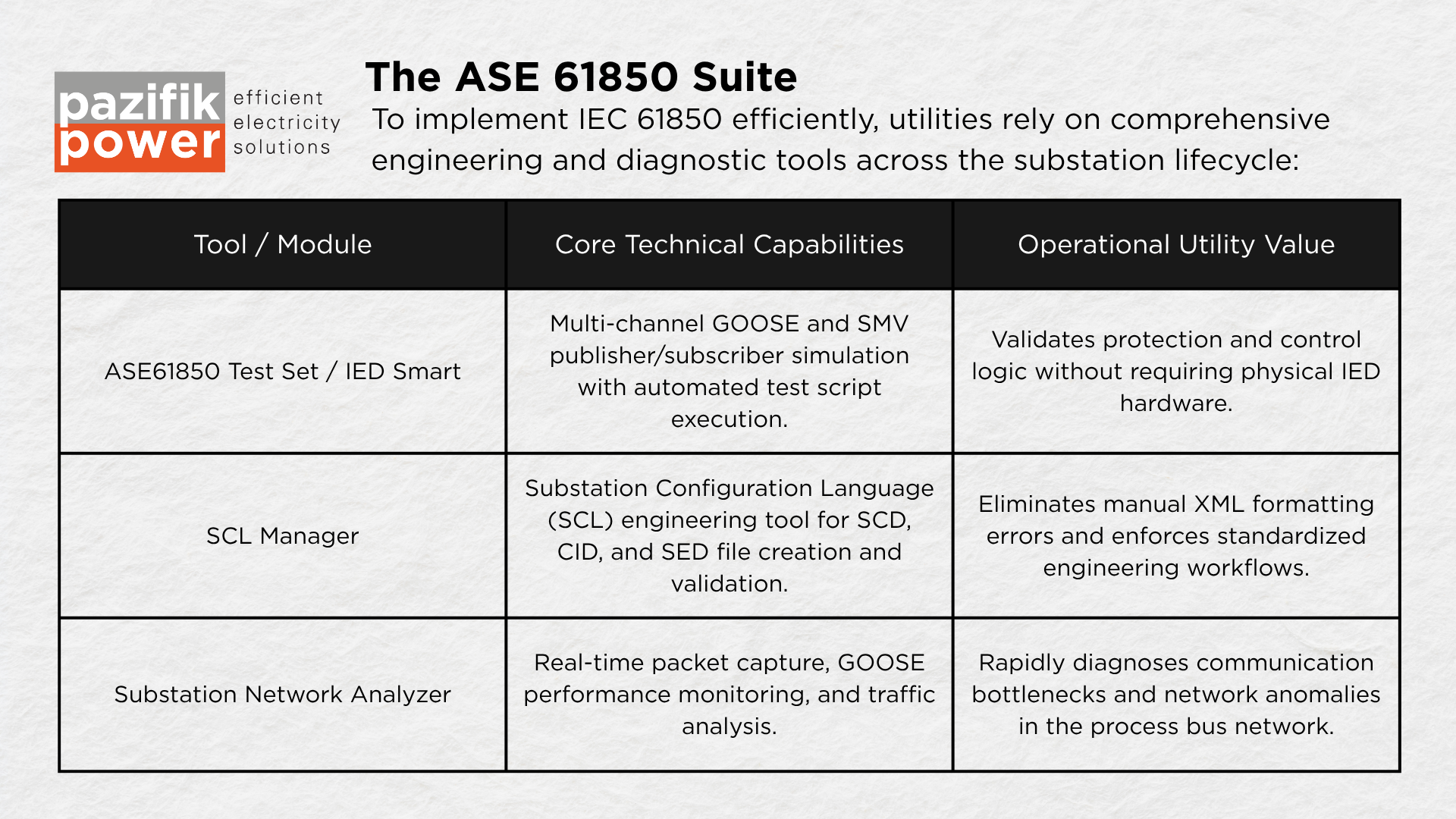
Automated SCL tools convert standardized bay templates into complete Substation Configuration Description (SCD) files, reducing manual engineering errors and significantly accelerating deployment timelines. - Edge Artificial Intelligence (AI) and Load Analytics
Integrating AI and Non-Intrusive Load Monitoring (NILM) technologies into substation edge devices enables automatic detection of unregistered EV chargers, improved solar generation forecasting, and proactive protection of distribution transformers against localized overloads.
2. Grid-Edge Digitalization & Operational Data Hubs
Integrating decentralized renewable energy sources while maintaining grid stability requires real-time visibility below the distribution transformer level.
- Two-Tier Grid Control Strategy
Operates a specialized low-voltage control framework alongside traditional control centers, providing granular network visibility and enabling utilities to evolve into active Distribution System Operators (DSOs). - Dynamic Operating Envelopes (DOEs)
Replaces static interconnection limits with real-time export limits that continuously adjust according to feeder capacity, maximizing renewable energy integration without costly infrastructure expansion.
Core Integration Spine: KALKI.io DER Data Hub Architecture
Serving as a high-performance integration platform, the KALKI.io Data Hub connects and normalizes data across more than 80 legacy and modern IT, OT, and IoT protocols, including:
- IEEE 2030.5 / CSIP
- DNP3
- IEC 61850
- DLMS
- OpenADR
- OCPP
This vendor-neutral architecture eliminates data silos and enables seamless interoperability among SCADA systems, Advanced Metering Infrastructure (AMI), Geographic Information Systems (GIS), and Distributed Energy Resource Management Systems (DERMS).
3. Global Case Studies: Lessons in Utility-Scale Grid Integration
International deployments demonstrate the effectiveness of vendor-neutral data hubs in solving complex grid-edge integration challenges.
- Rapid Commercial EV & Battery Onboarding (USA)
FlexConnect Dynamic Operating Envelopes enabled sites facing lengthy grid upgrade delays to energize within weeks while achieving approximately 90% of requested capacity without compromising network safety. - Strict Cybersecurity Hardening (USA)
Residential energy storage integration leveraged hardened edge gateways featuring PKI, IAM/SSO, and SIEM compatibility, meeting stringent OT cybersecurity requirements. - High-Availability Disaster Recovery (USA)
Active-active data hub clustering across physical control centers and cloud environments ensured uninterrupted monitoring during severe weather events and cloud outages. - Multi-Vendor Solar & EV Fleet Aggregation (USA)
Standardizing cloud-to-cloud OEM data from solar inverters and EV charging infrastructure enabled real-time visibility for demand management, peak load shaping, and voltage regulation. - Community Energy Storage & Market Integration (Australia)
Multi-protocol edge gateways connected community battery systems directly to SCADA and energy market platforms, supporting Frequency Control Ancillary Services (FCAS) participation.
4. Strategic Implementation Path: Building the National Grid of Tomorrow
To guide utilities through digital transformation, experts outlined a structured four-phase implementation roadmap:
- Phase 0: Proof of Concept (8–12 Weeks)
Rapid deployment of a cloud-based Data Hub environment validates protocol translation and simulates field gateways across representative assets. - Phase 1: Production Hub & Core Integration (Year 1)
Establish active-active production environments with Disaster Recovery (DR) capabilities and integrate directly with HES, SCADA, ADMS, and GIS platforms. - Phase 2: Aggregator DERMS & VPP Dispatch (Years 1–2)
Onboard renewable assets, enable Virtual Power Plant (VPP) dispatch, and automate Dynamic Operating Envelope management. - Phase 3: Automated DSO Control (Years 2–3+)
Complete the transition to a fully automated Distribution System Operator model with adaptive grid orchestration and power flow optimization.
The Path Forward
Adopting vendor-neutral grid data hubs and virtualized substation automation represents a significant step toward a more resilient, reliable, and sustainable energy ecosystem.
By intelligently orchestrating distributed solar generation, battery energy storage, and electric vehicle infrastructure, utilities can accommodate higher levels of renewable energy, improve service reliability, and defer major capital investments.
To explore these solutions or arrange an innovation briefing, contact PPI Pazifik Power, Inc. and learn more about technical deployment strategies, demonstration environments, and project integration roadmaps.
Website: www.ppi.ph
Email: info@ppi.ph